Saturday, 25 January 2014

EARLY POSTERS

Early Posters' main focal points were advertising and propaganda. They were produced in bulk print and made use of minimal imagery. They started off in black and white before the colour was introduced.

In 1890 till 1990 the  craze for coloured posters began. Paris was the centre of the art universe of the time and had an outbreak with colourful imagery. Jules Cheret was known as the father of posters and father of modern advertising.  He made us of colourful illustration, vibrant strong colours and added typographic elements, how ever type was kept minimal. In his work, imagery is dominant, being the main focal point.

Cheret had made over 1000 posters. These posters were seen all over paris, with people starting collections of them. They were selling for a lot of money and were wanted to be used to decorating homes. Due to this evolution printing increased. Print dealers sold loads of posters, making the era of the first posters survive for quite some time.

Printing in colour was a very slow and delicate process, but thanks to Jules invention of the three stone printing process it was able to be done faster, making use of blue red and yellow, and were able to overlap. Through this process Cheret created a graphic art style with the combination of text and imagery.

Few of the many famous poster designs of Jules cheret:


In poster advertising we come across great influential works of several designers. These artists, took lots of influence from each other and their work is in fact still influential till this very day. Their works are considered to be poster masterpieces.

Toulouse Lautrec's famous and influential posters:

1)Henri de Toulouse-Lautrec - Poster for the Music Hall Le Divan Japonais 1893

2)Jane Avril 1893

3)poster for La Revue Blanche, 1895


Cappiello modern Poster designs:

1) Alcohol promotional poster Maurin Quina 1906

2) Absinthe Ducros Fils alcohol poster


 CAPPIELLO , Leonetto | Maurin Quina . 2014. CAPPIELLO , Leonetto | Maurin Quina . [ONLINE] Available at: <http://cs.nga.gov.au/Detail.cfm?IRN=144322.> [Accessed 23 January 2014].

Henri de Toulouse-Lautrec - Poster for the Music Hall Le Divan Japonais 1893 - detail Painting. 2014. Henri de Toulouse-Lautrec - Poster for the Music Hall Le Divan Japonais 1893 - detail Painting. [ONLINE] Available at:<http://www.encore-editions.com/henri-de-toulouse-lautrec-poster-for-the-music-hall-le-divan-japonais-1893-detail.> [Accessed 23 January 2014].

Jane Avril - Henri de Toulouse-Lautrec - WikiPaintings.org. 2014. Jane Avril - Henri de Toulouse-Lautrec - WikiPaintings.org. [ONLINE] Available at:<http://www.wikipaintings.org/en/henri-de-toulouse-lautrec/jane-avril-1893.> [Accessed 23 January 2014].

SHAFE | H. de Toulouse-Lautrec poster for La Revue Blanche, 1895. 2014.SHAFE | H. de Toulouse-Lautrec poster for La Revue Blanche, 1895. [ONLINE] Available at: <http://www.shafe.co.uk/art/h-_de_toulouse-lautrec_poster_for_la_revue_blanche-_1895.asp.> [Accessed 23 January 2014].

Absinthe Ducros Fils @ All Posters. 2014. Absinthe Ducros Fils @ All Posters. [ONLINE] Available at: <http://fairyroom.com/2012/06/green-fairy-feminist-origins/absinthe_ad_fairyroom-2/.> [Accessed 25 January 2014].

I’m on Fire- Cigarette Smoking in Vintage Posters | Vintage European Posters. 2014. I’m on Fire- Cigarette Smoking in Vintage Posters | Vintage European Posters. [ONLINE] Available at: <http://vepca.wordpress.com/2011/05/07/im-on-fire-cigarette-smoking-in-vintage-posters/.> [Accessed 25 January 2014].

History Of The Poster - YouTube. 2014. History Of The Poster - YouTube. [ONLINE] Available at: <http://www.youtube.com/watch?v=VFRyTxcy79k.> [Accessed 25 January 2014].

Design History: Jules Cheret. 2014. Design History: Jules Cheret. [ONLINE] Available at: http://be-artsy.blogspot.com/p/jules-cheret.html. [Accessed 25 January 2014].

Johannes Gutenburg

In the past books weren't available to the public and in fact there were very few, mostly available to monks and priests. The Literacy level was extremely low at the time and the literate mostly consisted of only the rich. It was considered a privilege and not a right. Books were hand written by the monks and often took months if not years to be made. 

In 1450,  Johannes Gutenberg invented the  movable type technique. It was inexpensive and abled people to  make a lot of the same books. The first technique of printing known to man was the woodcut. It was able to produce pictures and text. However, it was a very long process taking months if not years. 

During the 15th century this became got very popular. The demand for books was on the increase, libraries were in fact created. Books however were  too expensive, and there needed to be a mass of them.

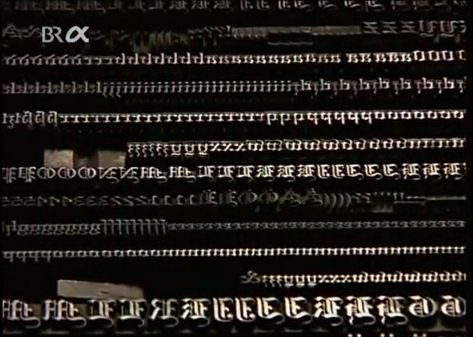
Gutenberg  invented his new technique, cutting up text separately. He then put them together over and over again to form different words. He later on stepped up his game and invented the hand casting instrument, where molten lead was poured into a rectangular channel. This allowed him to mass produce letters and produce them quickly. The main advantage of his invention was that it was able to be re used over and over again, saving both time and money. These different letters were then put into a typesetter, forming a line of letters/words ready to print. His first big work after trying out official documents and grammars was the Latin bible, taking him and his co workers 2 years to produce 180 copies. He aimed at making his work look aesthetically pleasing just at though it was hand written. His technique was soon spoken of in several different countries and the first printing presses started to be set up and the Typeface Antinqua was soon born and spread through out most of Europe. 


The process of how the letters were made using molten lead.


Thanks to Gutenberg's creation an unlimited number of the lead letters could be produced. 


This led to an increase in book production, increase literacy rates  and making books lower  in price, becoming more affordable. At this point, everyone was being given the chance to read and it wasn't just the rich anymore who had this privilege.


Libraries started to be made as books suddenly started to become a demand.


After people took on this printing method, fliers started to be made - them being the new form of news media. In 1650 the first newspaper was created and was published 6 days a week.  However the first newspapers started to be made and become dominant when the steam powered rotary printing press' were made in the 19th century. Through this we can see that the invention of movable type has changed the printing world forever.

Books started to then, be produced in bigger numbers with new machinary.


Screenshot of one of Gutenberg's first fliers ever distributed. It was deigned to warn the people of a flood soon to occur.


85 Johannes Gutenberg and the Printing Press - YouTube. 2014. 85 Johannes Gutenberg and the Printing Press - YouTube. [ONLINE] Available at: <http://www.youtube.com/watch?v=Y1vl2j24Mtk. > [Accessed 22 January 2014].

Johannes Gutenberg - Printing Press. 2014. Johannes Gutenberg - Printing Press. [ONLINE] Available at:<http://inventors.about.com/od/gstartinventors/a/Gutenberg.htm.> [Accessed 22 January 2014].


INDUSTRIAL REVOLUTION

The Industrial Revolution is characterised by numerous technology advancements in the use of electricity and steam. The rise of these advancements effected greatly communication, transportation and agriculture. The industrial revolution replaced to use of manual labour by new inventions, and new machinery in various industries. This changed the views of society and made it an urban production centred environment. Industries growing during this era aimed at mass production, and adapted a faster and cheaper and smaller outlook on production. An industry which was greatly influenced through this was that of printing. At this point steam power introduced a more efficient and effective rotary cylinder web presses. This transformed the layout and gave published materials a better appearance. Type also went under a transformation thanks to line casting machines. The typesetting type can be used and re used for later on and saved money because the use of heavy metal machines hand operated type machinery wasn't needed anymore. With this revolution, when it came to presentation with print, there was a lot more experimentation and gave more thought to design. Obviously this led to a rise in the advertising industry. Thanks to this advance in technology a lot of new typefaces were being introduced and tried out. This whole outcome obviously let to improvements and influence in education and lifestyle leading to an  increase in literacy, book and newspaper production. Thanks to the invention of Friedrich Koenig, his steam power press made printing easier and most definitely faster. This rise in business meant a rise in economy and also a rise in employment. 


Vintage Printing Factory. 


Rotary cylinder web press


  What they used in the past to print type. 


Hand-composition in the old Printing House situated behind the Pitt Building, Cambridge. Note the 'upper case' and the 'lower case' for type in the background. Photographer: J. Palmer Clarke. ca. 1900–1916. This item is currently being catalogued, temporary classmark: UA 2008/1/1.


Cambridge University Press Archive Project. 2014. Cambridge University Press Archive Project. [ONLINE] Available at: <http://www.lib.cam.ac.uk/deptserv/manuscripts/universityarchives/cupdetail.html.> [Accessed 25 January 2014].

Printing press - Wikipedia, the free encyclopedia. 2014. Printing press - Wikipedia, the free encyclopedia. [ONLINE] Available at: <http://en.wikipedia.org/wiki/Printing_press.> [Accessed 25 January 2014].

Printing Industry: Information from Answers.com. 2014. Printing Industry: Information from Answers.com. [ONLINE] Available at: <http://www.answers.com/topic/printing-industry.> [Accessed 25 January 2014].

Industrial Revolution. 2014. Industrial Revolution. [ONLINE] Available at: <http://www.princeton.edu/~achaney/tmve/wiki100k/docs/Industrial_Revolution.html.> [Accessed 25 January 2014].

Friday, 24 January 2014

Theo Van Doesburg

Theo Van Doesburg was born in The Netherlands in 1883 and passed away in 1931. He was an artist practicing as a typographer, architect and writer however He preferred writing about art rather than practicing it.

He is the founder of De Stijl, dating back to 1917. De stijl was a movement which emphasised construction and function. The Guggenheim collection described this as being appropriate for every aspect of life. All that was used in De Stijl were vertical and horizontal lines and primary colours alongside black and white. in 1921, Van Doesburg, along with Mondriaan, designed the new Logo for De stijl. This logo consisted simply of a Sans Serif type.

An influential work in the world of Type is that of Van Doesburg - The Square Alphabet. It consists entirely of even-weighted strokes. Each letter is design based on a 5x5 raster. Infact the K, R and X were considered illegible to some due to this design. The finished type was then utilised first in 1919.


Square Alphabet 
1919 
Van Doesburg's alphabet revived as Architype Van Doesburg


Bond van Revolutionaire Socialistische Intellectueelen
1919
logodesign


Along his line of work, from 1922 we notice Dadaist influence in his work. He even worked alongside constructivists and took upon great interest in the Bauhaus. In fact in 1924, The De Stijl movement started fading away as Van Doesburg started to introduce Bauhaus and Dadaist influences. Even though he took a great interest in the Bauhaus work, Walter Gropius didn't fully take him on as a lecturer/professor. Due to this Van Doesburg opened up his studio right next to the Bauhaus building to attract as many students as he could with his designs based on constructivism, Dadaism and De Stijl. 


Kleine Dada Soirée
1922
30,2 × 30,2 cm
New York,
Museum of Modern Art 


For many years to come Van Doesburg has influence many graphic designers with his theories and simplified geometric style.


Painting by Theo Van Doesburg.


Theo Van Doesberg : Design Is History. 2014. Theo Van Doesberg : Design Is History. [ONLINE] Available at: <http://www.designishistory.com/1920/theo-van-doesberg/.> [Accessed 20 January 2014].

A History of Graphic Design: Chapter 45; Dadaism; The meeting point of all contradictions. 2014. A History of Graphic Design: Chapter 45; Dadaism; The meeting point of all contradictions. [ONLINE] Available at: <http://guity-novin.blogspot.com/2011/08/chapter-44-dadaism-meeting-point-of-all.html.>[Accessed 20 January 2014].

Laszlo Moholy-Nagy


Laszlo Moholy Nagy is on of the most influential post war educators in the US. He was a modernist who took great influence from Dadaism, and Constructivism. He was in fact an educator at the Bauhaus, a  commercial designer and a film maker. He believed that modernism was to influence everyone, be it artists and designers of all sorts. He had a great interest in photography and he believed that this made artists need to learn to 'see again'. With it he experimented with photographic process of exposing light sensitive paper, resulting in photograms. He also made use of photo collage and unusual cropping.  He strongly influenced all of his students, especially with his love for modern materials. He refers to photography as a fine art, comparing it to painting. 


- Moholy-Nagy photogram

Along with Kurt Schwitters and Jan Tschichold, Moholy-Nagy tried to articulate the new typography. In order to create this new type they had characteristics in mind, being Sans serif type asymmetrical composition, mostly lowercase, grids, geometrical forms and lack of decoration. 

"typography is an instrument of communication and must be as clear and effective as possible." - Laszlo Moholy-Nagy.


When at the Bauhaus Moholy-Nagy designed the Letter head for bauhaus Publishing. It consisted of a square, a circle and a triangle, all geometrical shapes which played a main part in the bauhaus design.
He also designed a typo-photo. This is a combination of photo and type something very prominent in the world of Graphic Design Today. 


Letterhead for Bauhaus Publishing
Laszlo Moholy-Nagy 1923


Bauhaus 5, Neue Gestaltung Piet Mondriaan, the design attributed to László Moholy-Nagy 1924


"What is typophoto? Typography is communication composed in type. Photography is the visual presentation of what can be optically apprehended. Typo-photo is the visually most exact rendering of communication. '' Laszlo Moholy-Nagy."
I see his work as an inspiration to my own. I like how he worked with black, red and white, emphasising contrast between what he portrayed in his designs. The grid makes everything look asymmetrical and gives a sense of order throughout. Even though he has type which goes in different directions it isn't over whelming because his work is not chaotic and over done. He keeps it simple conveying and portraying modernism. 

László Moholy-Nagy. 2014. László Moholy-Nagy. [ONLINE] Available at: <http://www.nndb.com/people/301/000113959/.> [Accessed 16 January 2014].

Inkling. 2014. Inkling. [ONLINE] Available at: <https://www.inkling.com/read/history-of-graphic-design-philip-meggs-5th/chapter-16/the-impact-of-laszlo-moholy-nagy.> [Accessed 16 January 2014].

Laszlo Moholy-Nagy : Design Is History. 2014. Laszlo Moholy-Nagy : Design Is History. [ONLINE] Available at: <http://www.designishistory.com/1920/laszlo-moholy-nagy/.> [Accessed 16 January 2014].

Laszlo Moholy-Nagy - iconofgraphics.com. 2014. Laszlo Moholy-Nagy - iconofgraphics.com. [ONLINE] Available at: <http://www.iconofgraphics.com/Laszlo-Moholy-Nagy/.> [Accessed 16 January 2014].


GRUNGE


GRUNGE emerged back in the late 80's in Seattle. It is said to have been inspired by Punk, Rock and heavy metal. It effected several elements in life such as fashion, music, graphic design and typography. During this time there was an outburst especially in the music industry making record labels go crazy starting off from Seattle and merging into several cities in no time. This happened mainly during the 1990's and even though this craze started to fade away soon after, this movement still as great influence on modern rock music today. Grunge is also very popular today when it comes to use in Graphics and the Arts.

When we look at type in the Grunge era, and even today we notice certain characteristics which are consistent. Words were randomly placed, letters were blurred, textures thick and most of the time heavy. It looks somewhat unfinished and chaotic but still aesthetically attractive. It is nowadays coming back into trend and lots of people are using it, it being for postcards, online sites, book covers, magazines and more. Characteristics of the grunge, be it in type or other designs are irregular lines and frames, randomly placed text, breaking of the grid, dirty texture and images, unclear and distorted type and image, torn paper effect and hand written elements. Type also consisted of magazine cut outs put together to form a sort of collage with words.  The use of hand written type for example, gives off a personal and individual feel of the designer. Grunge designers also used photo manipulation, photomontage and vibrant colours.

One of the most influential graphic designers in Grunge is David Carson, and is in fact known as the Godfather of Grunge. He didn't go by the rules of Graphic design and this is what made him popular at the time - ''You don't need to know the rules before breaking them, and never mistake legibility for communication''.


Nirvana Screaming Trees 1990 Poster.


Jenn B’s Typographic Grunge Brushes
A random collection of grungy, decayed typographic brushes. (This shows the influence 

in today's Graphic Design. Brush tools designed to achieve the effect).


Pearl Jam and Blink-182 were two of many 90s bands that adopted grunge typography in their image.


Ray Gun Magazine - David Carson


 The Word Grunge Printed In Red Ink On Parchment, Faded, Damaged.. Royalty Free Stock Photo, Pictures, Images And Stock Photography. Image 9791529. . 2014. The Word Grunge Printed In Red Ink On Parchment, Faded, Damaged.. Royalty Free Stock Photo, Pictures, Images And Stock Photography. Image 9791529. . [ONLINE] Available at: <http://www.123rf.com/photo_9791529_the-word-grunge-printed-in-red-ink-on-parchment-faded-damaged-and-destroyed.html.> [Accessed 12 January 2014].

Grunge - Wikipedia, the free encyclopedia. 2014. Grunge - Wikipedia, the free encyclopedia. [ONLINE] Available at: <http://en.wikipedia.org/wiki/Grunge.> [Accessed 12 January 2014].

Grunge Style In Modern Web Design | Smashing Magazine. 2014. Grunge Style In Modern Web Design | Smashing Magazine. [ONLINE] Available at: <http://www.smashingmagazine.com/2008/01/29/grunge-style-in-modern-web-design/.>[Accessed 12 January 2014].

The Rise And Fall Of Grunge Typography - The Awl. 2014. The Rise And Fall Of Grunge Typography - The Awl. [ONLINE] Available at: <http://www.theawl.com/2012/08/grunge-typography.> [Accessed 12 January 2014].